
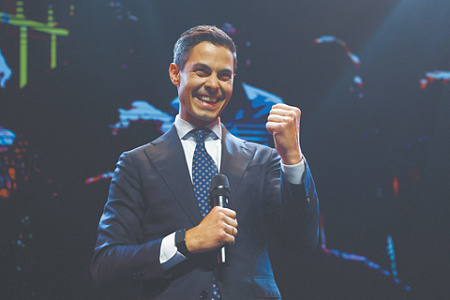
The political landscape of the Netherlands hangs in a delicate balance as preliminary results from the October 29 parliamentary elections reveal an unprecedented deadlock, leaving the nation’s future direction uncertain. With over 90% of ballots tallied, two starkly different political forces — Geert Wilders’ far-right Party for Freedom (PVV) and Rob Jetten’s centrist Democrats 66 (D66) — find themselves in an almost exact tie. Each has secured approximately 16.8% of the vote, projecting 26 seats in the 150-member parliament, a scenario that presents a stark contrast to broader European trends where populist and eurosceptic movements have often seen surging support.
While the ultra-right PVV currently holds a razor-thin lead of roughly 2,000 votes, the final outcome remains far from decided. Key votes from the capital, Amsterdam, with over 86,500 ballots yet to be processed, alongside those cast by Dutch citizens residing in overseas territories like Bonaire, Sint Eustatius, and Saba, are anticipated to be decisive. Young and ambitious, 38-year-old Rob Jetten leads D66, a party that has staged a remarkable comeback, while Geert Wilders, a veteran figure known for his anti-migration rhetoric, faces a significant setback from his party’s previous electoral highs.
Indeed, for D66, this outcome marks a triumphant resurgence. Just two years prior, in the last general election, the party managed to secure only nine parliamentary seats. Conversely, the current results represent a considerable blow to the PVV. In 2023, the party soared to an all-time high, becoming the largest faction in the lower house with 37 seats, subsequently forming a four-party coalition with the People’s Party for Freedom and Democracy (VVD), the New Social Contract (NSC), and the Farmer-Citizen Movement (BBB). This government, led by independent Prime Minister Dick Schoof, was short-lived, collapsing in July 2024 after only a year in office due to the PVV’s withdrawal over disagreements on strict immigration policies, notably Wilders’ proposal to halt refugee intake and deport Syrian refugees.
Regardless of which party ultimately clinches a marginal victory, the Netherlands is poised for complex and protracted coalition negotiations. The Dutch electoral system, designed to prevent any single party from achieving an absolute majority, necessitates multi-party alliances, often involving three or even four factions. Following the official announcement of the final results, an ‘informateur’ will be appointed to explore viable coalition options, after which a ‘formateur’ will be tasked with assembling a government and typically assuming the premiership.
Early projections suggest that D66 and its leader Rob Jetten might emerge as the cornerstone of the next ruling coalition, potentially making Jetten the youngest prime minister in Dutch history. Speculations point towards a potential alliance with the Christian Democratic Appeal (CDA), the left-centrist GreenLeft-Labour Party (GL/PvdA) alliance, and the VVD. However, the path to such a coalition is riddled with challenges, primarily stemming from VVD leader Dilan Yeşilgöz-Zegerius’s stated preference for a right-leaning government, which could complicate cooperation with the more left-leaning GL/PvdA.
This unexpected turn in Dutch politics raises pertinent questions about the trajectory of right-wing populism across Europe. Denis Letnyakov, Deputy Head of the Sector for the History of Political Philosophy at the Russian Academy of Sciences’ Institute of Philosophy, cautions against drawing sweeping conclusions. He notes that while the Netherlands appears to buck the trend, many neighboring European nations have seen a continued ascent of right-wing parties. “It’s difficult to speak of a weakening trend; this is just one such precedent so far. Whether it will continue is unknown,” Letnyakov comments, underscoring that populist movements still capitalize on enduring issues such as migration, social inequality, and economic hardship, while the traditional left struggles to reconnect with its working-class base.
Letnyakov further suggests that the PVV’s diminished performance could largely be attributed to voter fatigue and a perception of political ineffectiveness. “They primarily pushed a migration agenda, neglecting serious issues like the housing crisis, which D66 highlighted in its campaign,” he explained. Wilders’ decision to withdraw from the previous coalition, coupled with a perceived lack of significant achievements during his party’s time in power, may have ultimately eroded public confidence, making this Dutch election an intriguing anomaly in the broader European political narrative.