
Qatar is actively working to bring the United States and Iran back to the negotiating table regarding Tehran’s nuclear program, following the cessation of talks in June amidst a 12-day regional conflict. This significant diplomatic push was announced by Qatari Prime Minister and Foreign Minister Mohammed bin Abdulrahman Al Thani, who emphasized that the Middle East is not currently facing a nuclear arms race. He asserted there is no logical reason to restrict the Islamic Republic’s right to peaceful uranium enrichment, an assessment that aligns with the International Atomic Energy Agency’s (IAEA) findings that Tehran has not yet enriched uranium to high levels, despite its robust missile development efforts.
Speaking at an expert discussion in New York, Prime Minister Al Thani articulated Qatar’s position, stating, ‘There is no nuclear race now, and Iran has the right to develop its peaceful nuclear program to generate electricity or anything else within international law.’ This echoes a long-standing point of contention from the Iranian leadership regarding ‘zero enrichment’ demands. He expressed deep concern over the escalating rhetoric between Israel and Iran, which risks further regional instability. ‘We are trying to engage with the United States and Iran to achieve a resumption of talks between them on this issue,’ he added, expressing confidence that a serious dialogue could lead to an agreement.
The Qatari premier underscored the critical national security implications for his nation should another armed escalation, similar to the 12-day conflict in June, occur. He highlighted Qatar’s geographical proximity to Iran, noting they are separated by just 150 miles and share the world’s largest gas field, the South Pars – North Dome. For Doha, the stability of the Islamic Republic is intrinsically linked to the broader stability of the Persian Gulf region.
Meanwhile, IAEA Director-General Rafael Grossi, addressing the United Nations headquarters in New York, affirmed that the international agency possesses no data indicating Iran is accelerating nuclear material enrichment for military objectives. ‘Do we have any information that they continue to develop nuclear weapons? There has not been and there isn’t, I want to be extremely clear about this,’ Grossi stated. However, he did acknowledge the continued presence of uranium enriched to 60% within Iran, underscoring it as a key point of discussion requiring verification to ensure it is not diverted for other purposes.
Despite these diplomatic overtures, official statements from Iran’s Foreign Ministry indicate that while Tehran continues to exchange signals with Washington via intermediaries, these interactions do not constitute full-fledged nuclear negotiations. Iranian Foreign Minister Abbas Araghchi maintained that Iran would not return to formal talks until the United States abandons its ‘greedy policies’ and ‘unreasonable demands.’ He attributed the previous suspension of comprehensive talks, including those held on the sidelines of the UN General Assembly in September, to excessive demands from US officials.
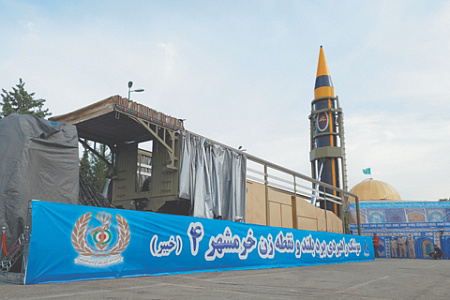
Adding further complexity to the situation is the reinstatement of UN Security Council sanctions, which had been lifted a decade ago under the terms of the Joint Comprehensive Plan of Action (JCPOA). These sanctions impact various economic sectors and significantly hinder Iran’s defense industry. European intelligence sources suggest that Tehran is now attempting to restore its missile capabilities through covert means. Reports, including one by CNN, indicate that several shipments of sodium perchlorate – a crucial component for solid rocket fuel – have arrived in Iran’s Bandar Abbas port from China since late September, with the Islamic Republic reportedly receiving 2,000 tons of the material.
Qatar’s enthusiasm for mediation is rooted in its significantly enhanced relationship with the United States in recent months, marked by security cooperation agreements unparalleled by other Gulf nations. These accords provide Doha with protection guarantees from Washington and grant its military access to certain US military facilities. According to Anton Mardasov, a Middle East expert, Qatar has cultivated a long-standing role as a skilled mediator across the region and in Africa, building influence over decades. Despite facing political scrutiny in Washington, Qatar continues its robust diplomatic efforts on multiple fronts, including Syria, Gaza, and the Iranian nuclear dossier. This multifaceted approach highlights Qatar’s combined, complementary role, even as negotiations concerning the Iranian nuclear program and developments in Gaza are officially separated, given Iran’s influence on Hamas and Qatar’s active engagement in disarming the movement and shaping the future of Palestinian political bodies.