
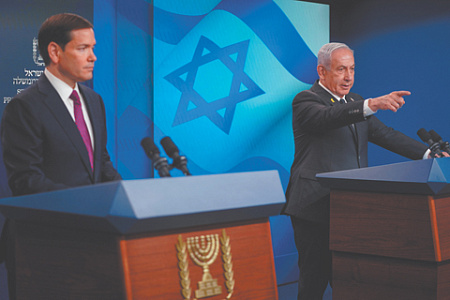
The Israeli operation in the Gaza Strip, now in its 23rd month, is entering a dramatic new phase. On the night of September 16, Israeli forces initiated a major ground offensive targeting Gaza City, where some of the hostages seized during the October 7, 2023 attack are believed to be held. The intensification of hostilities follows a recent visit by U.S. Secretary of State Marco Rubio, with Israeli officials claiming the U.S. administration has provided unconditional support for the operation.
The expanded military action began overnight, with at least two divisions of the Israel Defense Forces (IDF), previously operating on the outskirts of Gaza, advancing deep into the city with substantial air support. The IDF press service described the move as an “expanded activity” and a direct continuation of “Operation Gideon’s Chariots,” a ground offensive that began in May of this year after a ceasefire deal collapsed. To support this new push, approximately 60,000 additional reservists have been called up, joining the 70,000 already on duty.
According to sources cited by Al-Monitor, Secretary Rubio’s visit, which began on September 15, was a critical catalyst for the operation. An anonymous senior Israeli diplomat stated that the U.S. official’s visit and lack of criticism provided a “tailwind” for Israel’s military plans. During a joint briefing with Prime Minister Benjamin Netanyahu, Rubio showed unwavering support, stating, “We must remember who we are dealing with—a group of people who have dedicated their lives to violence and barbarism,” referring to Hamas. He added that while the U.S. seeks a diplomatic end to the conflict, a peaceful resolution “may not be possible.”
Hamas responded to the assault on Gaza City by declaring that Prime Minister Netanyahu bears direct responsibility for the fate of the remaining hostages. The group, which claims the U.S. shares the blame for the escalation, has reportedly altered its tactics. According to sources from the Israeli news company Kan, Hamas has moved some surviving Israeli hostages from underground tunnels to civilian buildings and tent camps on the surface, intending to use them as human shields to deter the Israeli advance.
The families of the hostages have issued a desperate and angry plea. In a statement, the Hostages and Missing Families Forum, a leading advocacy group, warned the military leadership, “You will be held responsible for every hostage who is harmed.” The organization accused Netanyahu of being willing to “wage an endless war for political reasons, knowingly and directly endangering all 48 hostages.”
Israeli officials, however, remain resolute. While visiting troops on September 16, Defense Minister Israel Katz asserted that the offensive is entering its most crucial stage. “There are only two things we need from Hamas, and they will not give them to us voluntarily: release all the hostages and disarm,” Katz said. “The harder we attack here, the more it… creates better conditions for the release of the hostages.” He argued that increased military pressure is what previously brought Hamas back to the negotiating table.
Meanwhile, Prime Minister Netanyahu has acknowledged the severe diplomatic costs of the prolonged war. Speaking at a conference on September 15, he described facing a “new and complex diplomatic reality” and warned of potential international isolation. “We could find ourselves in a situation where our defense industry is blocked,” he cautioned, stressing the need to develop a self-reliant domestic industry. He accused adversaries like China and Qatar of leveraging their influence to isolate Israel on the world stage.
In response to this growing pressure, Netanyahu outlined a new national strategy. “We will have to become Athens and a super-Sparta,” he declared. “We have no choice.” Shortly after, reports emerged that Israel is preparing to allocate $60 million in state guarantees to support national venture capital funds focused on defense technology. The initiative aims to de-risk investment in cutting-edge defense innovations and bolster the nation’s self-sufficiency amid mounting international criticism.